


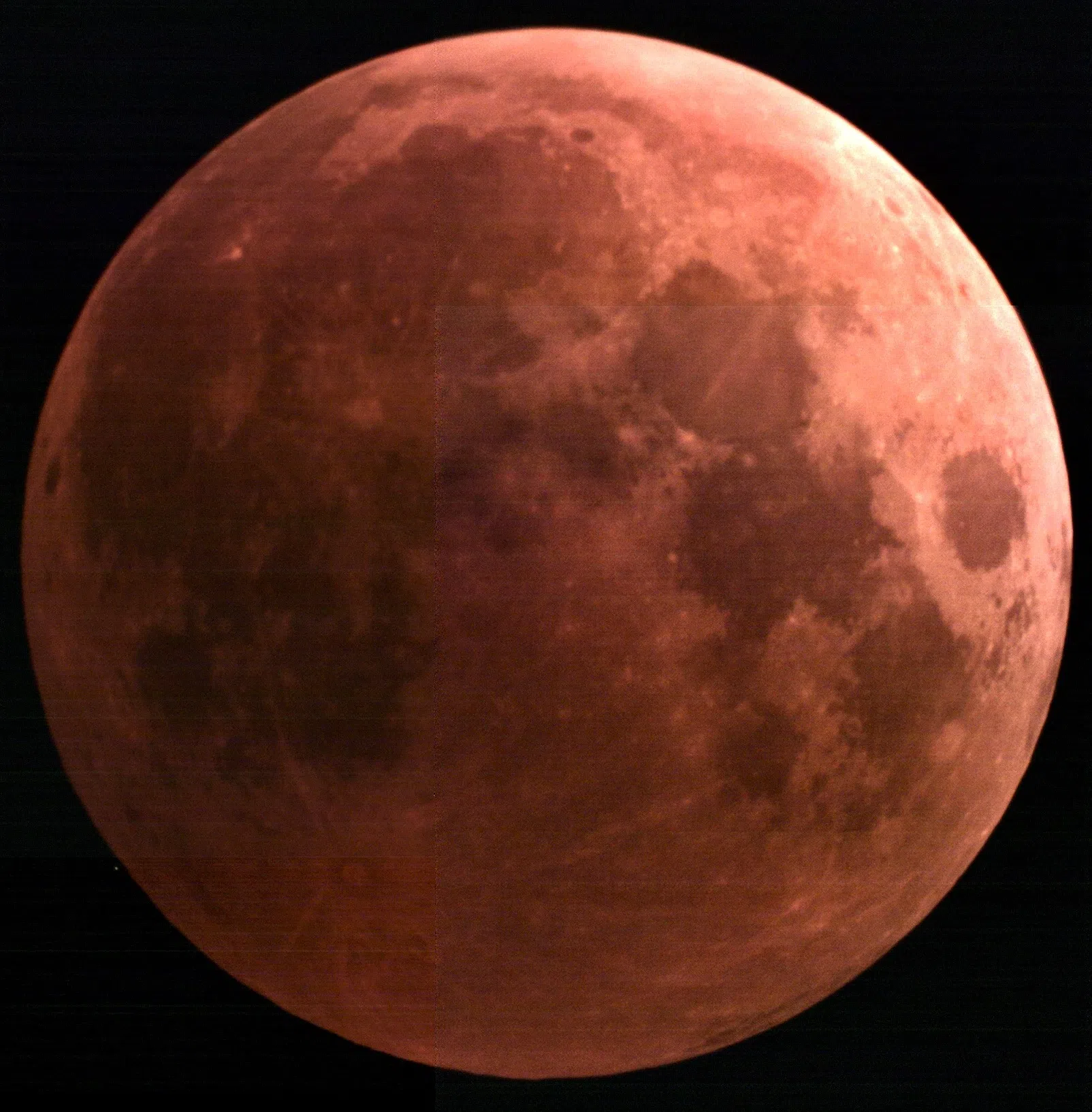
If you’re an early bird, you’re going to be in for a very special treat early tomorrow morning: a total lunar eclipse. LSU Planetary Astrophysicist Dr. Natalie Hinkel says it’s a phenomenon that happens when the sun, the Earth and the moon completely align with one another – in that order.
“The sunlight gets filtered through that atmosphere, which ends up removing most of the blue light and allows the red light to reach the moon. So this is why the moon often looks red, and it’s often called a blood moon,” Hinkel explained.
Hinkel says unlike in a solar eclipse, in which the path of totality is only a few miles wide, the path of totality in a lunar eclipse is several hundred miles wide. In this case, it encompasses the entire state at the same time, with the change starting around 2:44 a.m. (Totality begins at 5:04 a.m.; the max eclipsing occurs at 5:33 a.m., and it ends at 6:02 a.m.)
“The totality begins at 5:04 a.m., with a max eclipsing that occurs at 5:33 a.m., and then it ends around 6:02 a.m.,” Hinkel said.
Hinkel says if you want to see the lunar eclipse, set your alarm early, get out of bed and step into your back yard – because your next opportunity will not come around for a while.
“The next time that we get a full, total lunar eclipse won’t actually be until June 26, 2029; so about three and a half years from now,” Hinkel said.
More information on the event can be found at March 3, 2026 Total Lunar Eclipse in Baton Rouge, Louisiana, USA



Comments