


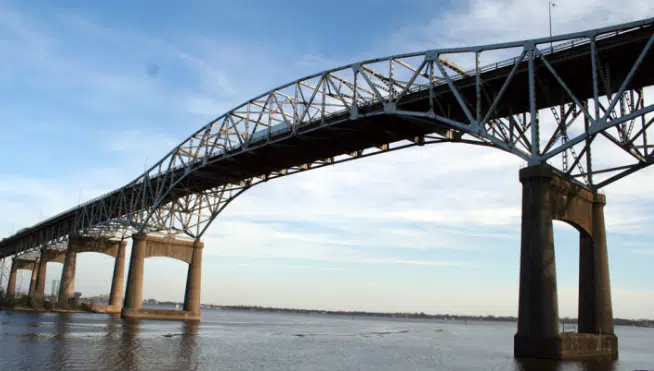
It’s unclear what will happen next after the House Transportation Committee votes against a plan for a new two-point-one billion dollar I-10 Calcasieu River Bridge in Lake Charles. The bridge would be partially funded by tolls. Sulphur Representative Les Farnum questioned the high price tag.
“It’s not the Mississippi River guys. It’s the Calcasieu River. I mean you can swim across it for god’s sake. And it’s not the major undertaking that it’s portrayed to be.”
The state Department of Transportation needed approval from lawmakers to enter into a public-private partnership that would lead to the construction of the new bridge.
800-million in federal and state dollars would go towards construction costs and tolls would pay for the rest of the bridge. Farnum says tolls are only used in the United States when you are building a new highway
“They want to come build us a loop around the existing bridge to ease the traffic? I’m all for it if they’re going to build it all with a toll. I’m not against tolls. There’s a place for them and this is not the place.”
Lake Charles Representative Wilford Carter urged the committee to vote for the plan, because he’s concerned if they do not, a new bridge will never be built.
“This bridge is going to be out of service in short order if we don’t do anything about it. Yes, they’re talking about making some repairs but we need a new bridge. A state-of-the-art bridge. An eight-lane bridge. A bridge that’s going to serve the southern part of the country.”
The Calcasieu River Bridge was constructed in 1952 and bridges built in the 1950s were only expected to last 50 years. Carter says a new bridge can also spur economic development for Lake Charles.
“When businesses throughout the country see you invested two billion dollars in your infrastructure, they look at that to whether or not they’re going to locate. And I think it’s going to make a big big difference in terms of development of that area.”
DOTD Secretary Eric Kalivoda says there are other options, including rehabbing the current bridge. But he’s concerned by not approve this public-private partnership, the state has lost out on a 150-million dollar federal grant.




Comments